
Germany’s construction industry — one of the busiest in Europe — is hiring general labourers, masons, formwork carpenters and skilled site workers for 2026. Employers include major building contractors, civil engineering firms and residential developers across the country.
Roles are open to skilled workers and trained freshers with basic English, physical stamina and willingness to work on active sites. The employer sponsors the German work visa and supports relocation.
Construction work is one of the most in-demand skilled jobs in Germany because of an ongoing shortage of site labour and tradespeople. From housing projects and commercial towers to infrastructure and renovation work, every contractor needs reliable hands. This guide explains the salary, benefits, eligibility, visa process and step-by-step application method for construction jobs in Germany in 2026.
🛫
About Germany’s Construction Sector
Germany builds hundreds of thousands of new housing units and major infrastructure projects every year, and runs one of Europe’s largest construction markets, which keeps demand for site labour and skilled tradespeople high all year round.
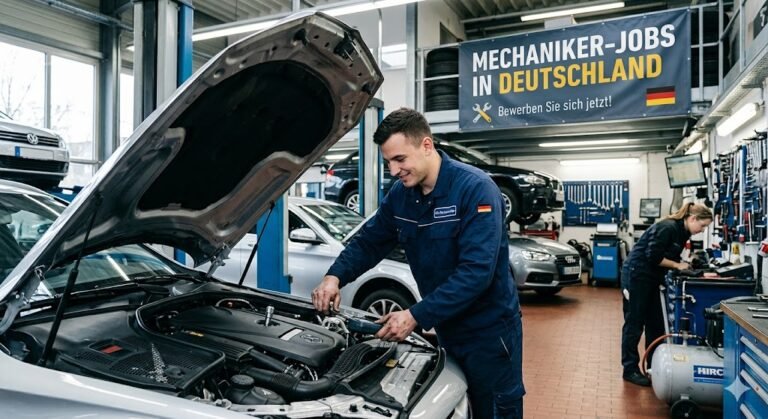
Mechanic Jobs in Germany: High-Paying Opportunities for Skilled Workers
Germany's automotive and engineering industry — the largest in Europe — is hiring auto mechanics, industrial mechanics and maintenance technicians for 2026. Employers include car workshops,…
Read the Full Guide →Because the country faces a long-term shortage of construction workers, construction jobs in Germany are advertised almost every month, and employers regularly recruit trained workers from India, Nepal, the Philippines and other countries on employer-sponsored work visas.
📋
Quick Summary Table
⭐
Why Construction Jobs in Germany Are Popular
📄
🧱
🗺
📈
🏢
Top Hiring Employers
📋
Available Positions with Role-Wise Salary
💰
Detailed Salary Breakdown
Approx. INR: €2,300 ≈ ₹2,07,000 and €4,000 ≈ ₹3,60,000 per month (gross, before tax and social security; rates vary).
📊
Germany vs Other European Countries for These Jobs
Germany offers one of Europe’s strongest packages for skilled construction workers, with a legal EU contract, statutory insurance and a clear route to residence:
Figures are indicative gross monthly ranges for entry-level roles; actual pay varies by employer, role and experience.

Lifeguard Jobs in Dubai 2026 (AED 2,500–4,500 Salary + Visa Assistance) – Waterpark, Beach & Hotel Hiring
Dubai's waterparks, public beaches and five-star hotels are hiring trained lifeguards for 2026 as new resorts and aquatic attractions open across the emirate. Employers include waterpark…
Read the Full Guide →🎉
Employee Benefits
🚶
Daily Job Responsibilities
- Carry out general building work including masonry, concrete and formwork.
- Read and follow site plans, blueprints and supervisor instructions.
- Assist with scaffolding, material handling and site preparation.
- Operate or assist with basic site tools and light machinery.
- Follow strict safety procedures and wear required protective gear.
- Keep the work site clean, organised and inspection-ready.
📦
Construction Work You Will Handle
Your on-the-job training will cover how each task is done to German site safety and building standards:
💪
Required Skills
- Physical fitness and stamina for the full shift
- Basic English communication (local language a plus)
- Alertness on workplace safety and hygiene rules
- Team-work across rotating shifts
- Willingness to work night, weekend and holiday shifts
- Punctual, honest and dependable
✅
Eligibility Criteria
- Age 18 – 45 years
- Passport with 18+ months validity
- Clean police clearance certificate (PCC)
- General medical fitness certificate
- Willingness to relocate to Germany on a work contract
- No prior Schengen visa refusal
🎓
Certifications Required
🎓
🏥
📄
Documents Required to Apply
Keep clear scanned copies of the following documents ready before you apply — most employers ask for them at the shortlisting stage:
- Valid passport (minimum 18 months validity)
- Updated CV / resume in English
- Passport-size photographs (white background)
- Educational and experience certificates (if any)
- Police Clearance Certificate (PCC)
- General medical fitness report
- Copy of any previous work permit or visa (if applicable)
🏭
Work Environment in Germany
German construction sites are well-organised, safety-focused and closely supervised. Employers provide tools, protective equipment, training and a disciplined, multicultural team environment where workers upgrade their skills quickly.
🏠
Accommodation & Living Facilities
Many employers in Germany support relocation and help you find affordable housing near the construction site, often arranging the first weeks of accommodation on arrival.
Plumber Jobs in Greece 2026 (€900–2,200 Salary + Work Visa) – EU Hiring for Skilled & Helpers
Greece's construction and hospitality sector is hiring plumbers for 2026 to install and maintain water, drainage and heating systems across new-build apartments, coastal resorts and hotel…
Read the Full Guide →Rooms are typically shared or single studios with a common kitchen, laundry and internet. With relocation support, a good part of your salary can be saved or sent home each month.
⏱
Working Hours & Shifts
Standard duty is 8 hours per day, 5–6 days a week on active building sites. Overtime and weekend work are paid extra under German labour law, with a minimum of 20 paid holidays.
📈
Career Growth Opportunities
🏦
Cost of Living in Germany
With relocation and housing support, your monthly personal spending in Germany stays around €600 – 900. Everyday costs such as a SIM card, transport pass and groceries are manageable on a construction worker’s salary, so many workers save or remit a solid share of their income each month while building a long-term career in Germany.
🌍
Why Foreign Workers Prefer Germany
📄
🗺
🏥
📈
💬
Common Interview Questions
Tell me about yourself.
Share your construction training, site experience and reason for wanting a Germany role.
Which construction tasks are you confident with?
Explain the masonry, concrete or formwork work you have done.
Can you work outdoors, at heights and overtime?
Yes — I am comfortable with outdoor site conditions, scaffolding and extra hours.
Do you know basic English?
Yes — enough for site instructions; I am learning German too.
What salary do you expect?
Confirm the offered range (€2,300 – 4,000) and openness to review after probation.
📝
How to Apply
🛂
Germany Work Visa Process & Timeline
Once you clear the interview, the employer handles most of the visa paperwork. Here is how the typical German work-visa process moves from offer letter to joining:
🎯
Tips to Get Selected Faster
- Keep a clean, one-page English CV that highlights any construction worker or related experience.
- Mention your physical fitness and willingness to work rotating shifts clearly.
- Apply early — intakes fill quickly once a batch opens.
- Get your passport, PCC and medical documents ready in advance to avoid delays.
- Be honest in the interview about your experience and salary expectations.
- Apply only through official career portals or licensed recruiters.
🔗
Where to Search Germany Construction Jobs (Official Portals)
- Never pay any agent for a Germany work visa — genuine EU employers do not charge visa fees.
- Avoid WhatsApp-only offers with no company website or company email.
- Verify the employer is a registered company in Germany before signing.
- Ignore agents promising a guaranteed Schengen visa for cash payment.
- Never share passport copies or bank details before a verified offer letter.
❓
Frequently Asked Questions (FAQs)
Can trained freshers apply for construction jobs in Germany?
Yes — many employers hire trained freshers with an ITI or trade background and provide on-the-job training.
Who arranges the German work visa?
The German employer supports the application; you apply for the work visa at the German embassy.
Is accommodation included?
Many employers support relocation and help you find affordable housing nearby.
What is the salary of a construction worker in Germany?
€2,300 – 4,000 per month (gross) depending on role, plus overtime, site allowance and paid leave.
Do I need to know German?
Basic English is enough to start; learning German helps you grow and settle faster.
What is the contract length?
Usually a 1–2 year renewable German work contract.
Can women apply?
Yes — women are hired for site administration, finishing and select construction roles.
What training is provided?
Site safety, tool handling and task-specific training on the job.
Do I get paid leave?
Yes — a minimum of 20 paid holidays plus public holidays under German law.
How do I apply?
Prepare your CV, complete the eligibility check and submit the online application form.
Which nationalities can apply?
Workers from India, Nepal, the Philippines and other countries can apply, subject to German work-visa eligibility.
How much can I save each month?
With relocation support, many construction workers save around €1,000 – 1,700 per month depending on overtime.
Is prior experience mandatory?
Trade training helps, but many employers train motivated freshers after joining.
Conclusion: Construction jobs in Germany pay €2,300 – 4,000 per month (gross) with an employer-sponsored work visa, relocation support, statutory health insurance, paid leave and a clear route to long-term residence.
Limited 2026 intake for German construction contractors and developers — submit your details today.